
The Great California Shuffle
California’s real estate and corporate landscapes are undergoing a massive transformation. Headlines are locked in a constant tug-of-war: on one side, major tech employers are strictly enforcing 3-to-5-day Return-To-Office (RTO) mandates. On the other, the dialogue surrounding regional relocation continues as families shift toward lower cost-of-living destinations like Texas and Nevada.
This demographic split has created two distinct moving patterns across the state. Thousands of professionals are moving back toward urban city centers like San Francisco and Silicon Valley to secure hybrid-friendly townhomes or condos closer to headquarters. Simultaneously, suburban households are orchestrating long-distance hauls across state lines to maximize their purchasing power.
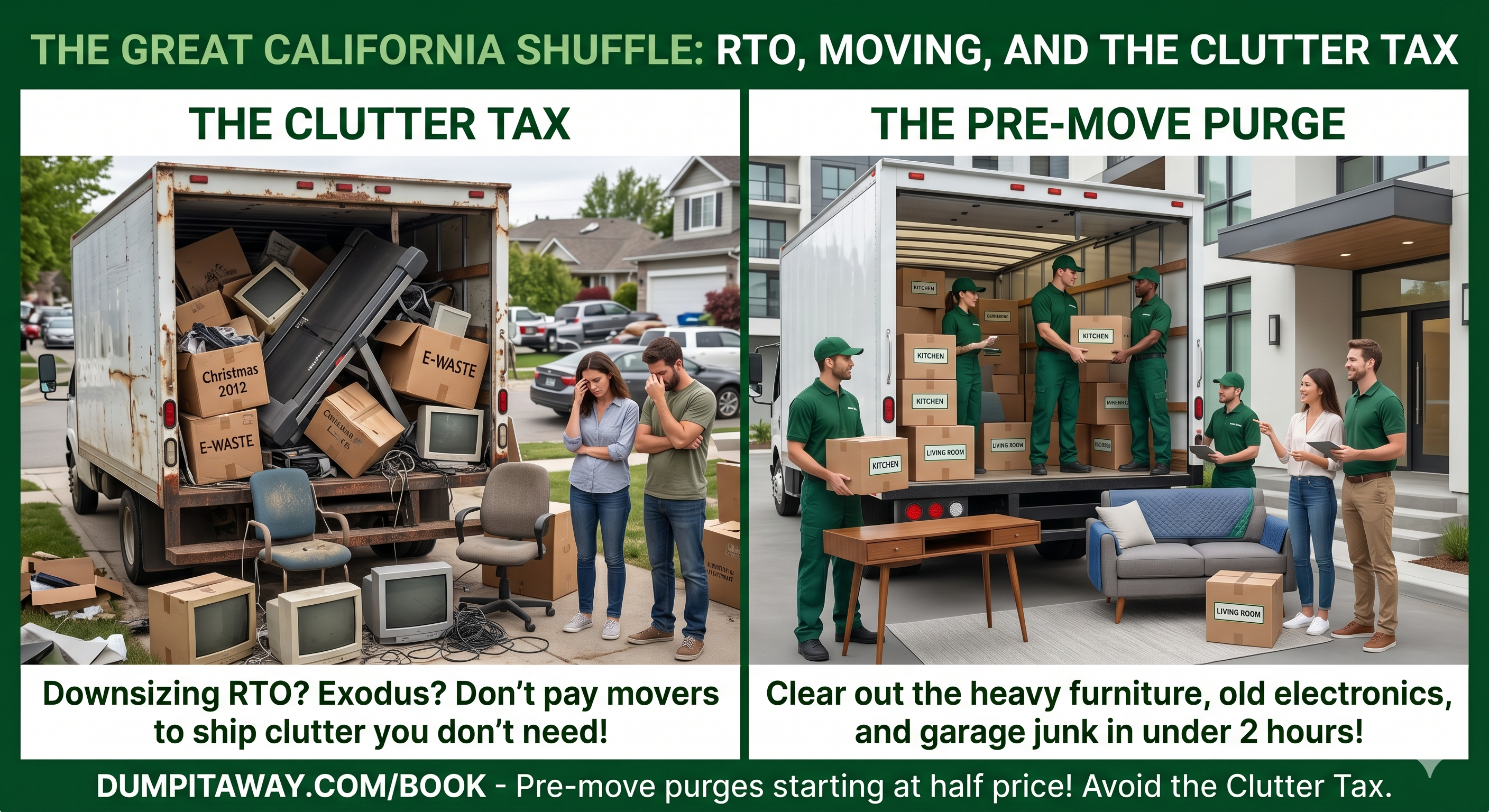
No matter which direction a household is moving, relocation is one of life’s most logistically demanding events. From a logistical standpoint, one of the most common pitfalls is paying moving companies to transport items that are no longer functional or necessary for the next chapter.
The Two Moving Realities Playing Out Right Now
Depending on professional requirements and lifestyle choices, most residential relocations in the state currently fall into one of two core tracks:
- The Urban Downsize (The RTO Realignment): Transitioning from an outlying suburban home into a smaller footprint near a tech corridor. When reducing total square footage, bringing along years of accumulated garage storage or oversized furniture simply isn't a practical option for the new layout.
- The Regional Relocation (The Cost-of-Living Play): Moving out of state to optimize housing budgets. While these destination markets often offer more space for the money, long-distance lines calculate their invoices primarily based on total weight and truck volume.
Logistical Reality: Professional moving companies operate on volume and weight metrics. They process freight based on the physical space it occupies in the truck and what it weighs on the scale, making the transport of unused clutter a hidden expense on the final bill.
The Hidden Math of Moving Costs
An analysis of standard moving estimates reveals that shipping unnecessary items is a significant drain on a relocation budget. Minimizing volume prior to securing a binding quote alters the logistical math favorably:
| Household Category | The Impact of Moving As-Is | The Impact of a Pre-Move Purge | Logistical Result |
|---|---|---|---|
| Outdated Electronics & E-Waste | Boxes of old monitors, tangled cables, and dead printers add volume and require specialized handling. | Responsible recycling and proper e-waste disposal before the moving truck arrives. | Reduces bulk cargo weight charges |
| Oversized/Unused Furniture | Hauling heavy, outdated dressers or broken fitness gear that won’t align with the new floor plan. | Routing quality items to local charities and clearing out items beyond repair. | Optimizes required truck size |
| Accumulated Garage Storage | Paying commercial movers to pack and transport miscellaneous yard tools, plastic bins, and old text books. | Clearing the space completely to ensure a smooth property handover to landlords or buyers. | Minimizes overall variable moving fees |
The Relocation Blueprint: Streamlining the Process
To keep relocation expenses manageable, managing the timeline systematically is essential. Executing a thorough sorting process before scheduling final moving assessments prevents unnecessary overhead:
Simplifying the Transition
Starting a new personal or professional chapter in a city-center condo or an out-of-state home goes much smoother with a completely clean slate. While sorting, loading, and hauling heavy property independently can add weeks of physical strain to an already exhausting process, utilizing a professional cleanout service to handle the lifting keeps the focus entirely on the logistics of the move itself. To instantly lower your moving volume and ensure an eco-friendly purge of your unwanted items, schedule your pre-move extraction with Dump It Away directly at dumpitaway.com/book.
Need Junk Removed in the Bay Area?
We provide upfront pricing, same-day scheduling, and eco-friendly disposal across San Francisco and the Peninsula.